Landscape architecture
Before Building, You Should Also Assess the Trees on Your Plot – What You Need to Know About Dendrological Surveys
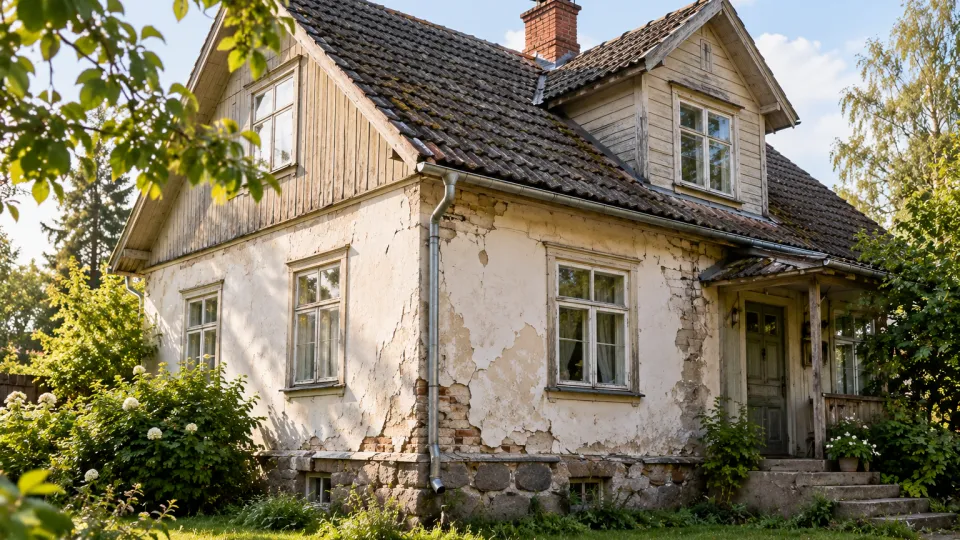
If you are planning to build a house, construct an outbuilding or change how your property is used, it is worth considering not only where the building will be located but also what is already growing on the plot. Trees and shrubs are more than just part of the landscape – they can influence construction planning, and specific requirements may apply to their preservation or removal.
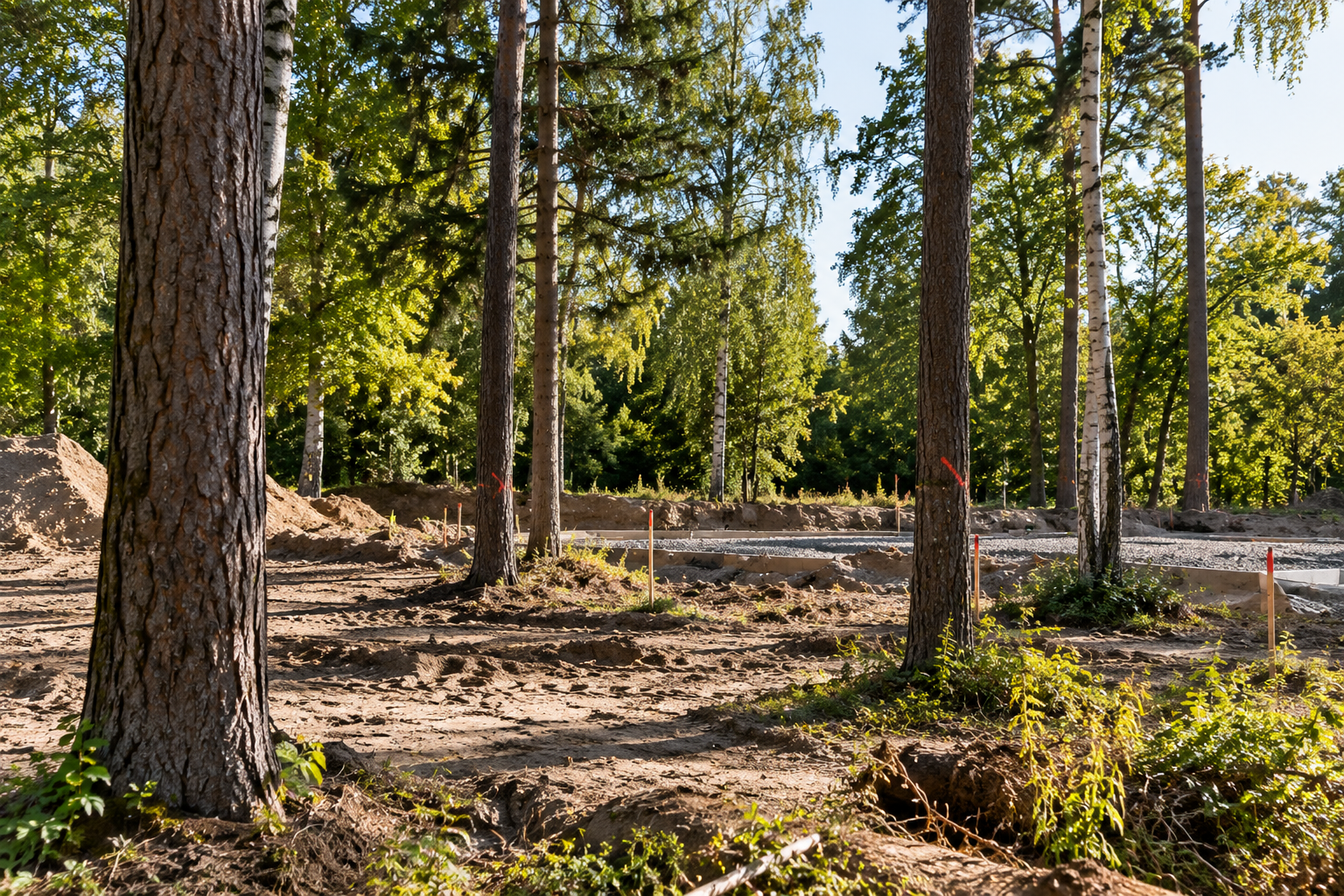
One important step before proceeding with the design process may be a dendrological survey, which involves assessing the trees and shrubs growing on the plot. What does this mean, when is it necessary, and how does it relate to tree preservation and replacement planting?
1. What Is a Dendrological Survey?
A dendrological survey involves mapping existing trees and shrubs and assessing their condition and landscape value.
The survey typically identifies:
- which tree and shrub species grow on the plot;
- their condition and landscape value;
- which trees could be preserved and which may require further assessment;
- how the existing vegetation is positioned in relation to the proposed construction.
The results are documented in accordance with the requirements of the specific project and the local municipality. They provide designers with essential information for planning the building, access roads and utility networks in a way that takes the existing vegetation into account as effectively as possible.
2. When Might a Dendrological Survey Be Required?
Whether a survey is necessary depends on the local municipality, the area, the characteristics of the property and the proposed activities. It may be required, for example, when preparing a detailed spatial plan or a building design project, as well as when planning roads, utility networks and other structures.
Requirements vary from one location to another. Therefore, at the very beginning of the construction planning process, it is worth contacting your local municipality to find out whether a dendrological survey is required for your property and what conditions it must meet.
Why is it worth addressing this early?
If the assessment of existing vegetation is postponed until the final stages of the design process, it may turn out that the proposed building or utility networks need to be relocated or the project revised. An early assessment helps prevent such situations.
3. Why Is It Important to Preserve Valuable Trees?
Large, mature trees give a property character, provide shade, offer protection from the wind and create a more pleasant living environment. Their value goes beyond appearance – restoring established landscaping can take years.
A dendrological survey helps identify valuable trees and determine how they can be accommodated in the design. Sometimes, simply adjusting the position of a building or access route is enough to preserve a tree that was initially considered necessary to remove.
However, preserving every tree is not always possible. The construction design, the condition of the trees, safety considerations and applicable requirements may mean that some vegetation must be removed. The important thing is to make these decisions carefully and as early as possible.
4. What Is Replacement Planting, and When Might It Be Required?
If trees need to be removed because of construction or another planned activity, the local municipality may require replacement planting. This means planting new trees to replace those removed or meeting other landscaping requirements established by the municipality.
The obligation to carry out replacement planting, its scope and the applicable conditions depend on the location and the regulations in force. It does not automatically mean that every tree removed must be replaced on a one-for-one basis.
A dendrological survey provides an overview of the existing vegetation and helps assess the impact of the proposed activities on it. The results can be used when preparing decisions about tree preservation and removal and, where necessary, when developing a replacement planting plan.
If replacement planting is required, the conditions should be clarified with the local municipality. This makes it possible to determine during the design stage where new trees should be planted and how they will fit into the future building and outdoor space.
5. Who Carries Out a Dendrological Survey?
A dendrological survey is carried out by a specialist with the relevant education and expertise, who understands woody plants and can assess their condition and landscape value.
A landscape architect may also provide this service if they have the qualifications and expertise required for the work. One advantage of working with a landscape architect is the ability to integrate the assessment of existing vegetation into the overall spatial design of the property.
This means that trees are not considered in isolation. The assessment also considers how they can be preserved and how existing and proposed landscaping can be integrated with the building, access routes and intended use of the outdoor areas.
6. What Should Property Owners Know Before Commissioning a Survey?
Before commissioning a dendrological survey, there are several important things to consider.
-
Obtain or check the availability of a topographical base plan. An up-to-date geodetic base plan is needed to prepare a dendrological survey. It provides the basis for marking the locations of woody plants on the plot and recording the survey results. Without a suitable base plan, the survey cannot be prepared correctly.
-
Check the local municipality's requirements. Ask whether a survey is required for your property and at what stage it should be carried out.
-
Prepare the existing documentation. If you have a detailed spatial plan or a preliminary building design, inform the specialist.
-
Explain your plans. Describe where you intend to build, which areas you plan to modify and which trees you would like to preserve, if possible.
-
Clarify the scope of work. Ask which documents will be provided and whether landscaping or replacement planting also needs to be planned in addition to the survey.
If the required topographical base plan is available and the municipality's requirements have been clarified early, the survey can be commissioned at the right time, helping to avoid delays later in the design process.
In Conclusion
A dendrological survey can be an important part of preparing for construction. It helps assess the trees growing on a plot, preserve valuable vegetation wherever possible and determine whether tree removal entails additional requirements, such as replacement planting.
Whether a survey is required depends on the specific property and the local municipality's requirements. It is therefore worth addressing this question before the building design has progressed too far.
Planning a construction project and need help assessing the landscaping on your property? Through BeforeBuilding, you can submit a free enquiry and find a landscape architect who can help you plan the next steps.
BeforeBuilding – find the right specialist for your project, all in one place.

Landscape Architecture Beyond the Home Garden: How to Create a Functional and Inviting Outdoor Space

Should You Do It Yourself or Hire a Landscape Architect?