Landscape architecture
Landscape Architecture Beyond the Home Garden: How to Create a Functional and Inviting Outdoor Space
When we talk about landscape architecture, we often think of private gardens, planting beds and terraces. In reality, the work of a landscape architect extends far beyond these spaces. Landscape architects help design the surroundings of office buildings, outdoor areas at hotels and spas, rooftop terraces, public squares, streets and other environments that people use every day.
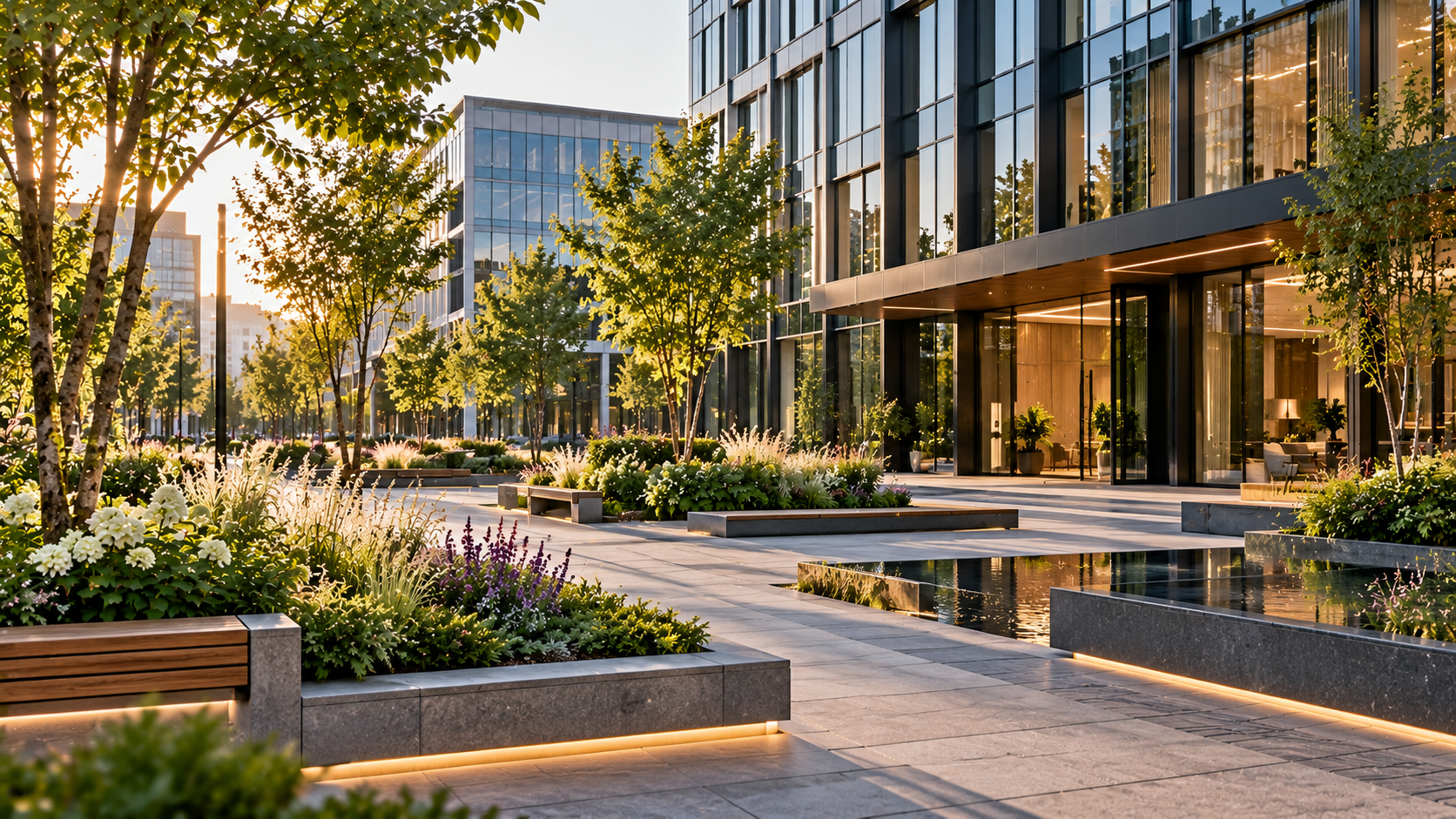
A well-designed outdoor space is more than just landscaping around a building. It influences how people arrive at a building, where they want to spend time, how they perceive the space and what impression the environment leaves on them.
For a business, property developer or public-space client, this creates an opportunity to develop an environment that supports the building’s function, improves the user experience and connects the architecture with the surrounding landscape.
1. A Building Does Not End at the Front Door
When planning a new office building, hotel or business centre, considerable attention is paid to architecture, interior finishes and technical solutions. The design of the surrounding area, however, can become a secondary consideration, initially limited to a car park, pavements and a few planting beds.
In reality, outdoor space is an essential part of the building as a whole.
Imagine an office building surrounded by extensive paved surfaces but lacking shaded seating areas, greenery and pleasant pedestrian routes. Now compare it with an environment where the entrance is easy to find, pathways are logical, landscaping provides shade and employees can sit outside during their breaks.
Both buildings may serve the same purpose, but the user experience is different.
A landscape architect helps determine how a building and its surrounding outdoor spaces work together. This includes circulation, spatial layout, landscaping, materials, lighting and the ways people can use the outdoor areas.
The aim is not simply to add greenery around a building, but to create an environment with a clear purpose and value.
2. A Business’s Surroundings Are Part of Its Identity
The physical environment of a business shapes visitors’ impressions before they even step inside. The entrance, forecourt, parking area, landscaping and maintenance of outdoor spaces all contribute to the overall impression.
This matters to clients, business partners, employees and other visitors alike.
For an office building, a well-designed outdoor space can give employees the opportunity to work outside, take lunch breaks or meet with colleagues. At a hotel, a garden can provide a place to relax, walk and enjoy the surroundings. A restaurant terrace can be an important part of the overall dining experience.
A landscape architect helps develop a solution that supports the specific activities of a business and meets the needs of its users.
It is also important to consider the identity the environment should communicate. Should it feel prestigious and urban, peaceful and close to nature, or open and welcoming to the wider community?
These decisions involve more than choosing plants or furniture. They begin with a holistic approach to spatial design.
3. Hotels and Spas: Outdoor Spaces Are Part of the Guest Experience
Guests at a hotel or spa evaluate more than their room, service and interior design. Their experience also includes what they see from the window, where they can go for a walk and whether the outdoor areas invite them to relax and spend time there.
A thoughtfully designed outdoor space can connect a building with the surrounding nature, provide privacy and create different opportunities for relaxation.
For example, a landscape architect may design:
- peaceful seating and relaxation areas;
- walking paths and connections between different parts of the building;
- a terrace that complements the surrounding landscape;
- outdoor areas sheltered from wind and sun;
- planting that creates privacy and helps define different spaces;
- a cohesive lighting and materials scheme.
At spas, outdoor spaces can be directly connected to the overall wellness experience. A nature-inspired relaxation area, a quiet garden corner or an outdoor space combining water, vegetation and different seating options can become an important part of the entire environment.
To ensure that outdoor areas are not only attractive but also practical, it is necessary to consider circulation, maintenance requirements, weather conditions, privacy and safety.
4. A Rooftop Terrace Is More Than a Garden on a Roof
Outdoor space is often limited in urban environments. Rooftop terraces, roof gardens and other building-related outdoor areas therefore offer opportunities to create new places for relaxation and socialising where there is insufficient space at ground level.
However, designing a rooftop terrace involves much more than adding a few planters, seats and pieces of outdoor furniture.
It is necessary to consider how people will move through the space, what views will be available, where the sun falls, how wind protection and lighting will be addressed, and which areas are suitable for working, relaxing or socialising.
Technical requirements must also be taken into account. Structural load-bearing capacity, waterproofing, drainage, roof slopes, the depth of the growing medium and access for maintenance can all influence which solutions are feasible. These issues require collaboration with architects, structural engineers and other relevant specialists.
A landscape architect helps integrate the spatial concept with these technical constraints, creating a cohesive design that meets users’ expectations while respecting the building’s capabilities.
A well-designed rooftop terrace can transform an underused surface into a valuable outdoor space where people can meet, relax and enjoy the surrounding urban environment.
5. Landscape Architects Also Help Shape Urban Spaces
The role of landscape architecture is not limited to private properties and commercial developments. It is also important in the design of streets, squares, parks, green spaces and other public areas.
Urban spaces must accommodate a wide range of users. Pedestrians, cyclists and people with pushchairs may share one area, while employees, residents and visitors meet in another. Some locations need places to rest, while others require better pedestrian connections or more shade during hot weather.
A landscape architect helps determine how different functions can work together and how to create spaces that are pleasant, easy to understand and practical to use.
Important considerations in urban design include:
- comfortable and logical pedestrian routes;
- places to rest and meet;
- the role of trees and other vegetation in providing shade and shaping the microclimate;
- stormwater management and the use of permeable surfaces;
- accessibility for people of different ages and with different needs;
- connections between the space, surrounding buildings and the street network.
These decisions influence whether people want to spend time in a space or simply pass through it as quickly as possible.
Landscape architecture is therefore about more than beautifying an environment. It helps create spaces that support everyday life and make urban environments more pleasant.
6. Landscaping Is More Than Decoration
Vegetation is an important part of outdoor space, but its value extends beyond visual appeal.
Trees can provide shade, reduce exposure to direct sunlight and support the urban microclimate. Thoughtfully selected planting can connect different parts of a space, provide habitats for other species and create seasonal variety.
At the same time, landscaping must be suited to the conditions of the specific site. Soil, moisture, light, wind, growing space and future maintenance all need to be considered.
For example, a design that initially looks impressive but is unsuitable for the site may require considerable additional work later. If trees do not have enough room to grow or planting areas are designed without considering water movement, the result may not function as intended.
A landscape architect helps balance the use of space, planting, technical requirements and long-term maintenance.
A good landscaping solution does not have to be complicated or require constant attention. What matters is that it suits the environment and supports the purpose of the outdoor space.
7. When Should a Business Involve a Landscape Architect?
Involving a landscape architect is particularly worthwhile when planning a new building, redesigning an existing property or making a significant investment in outdoor areas.
Consider engaging a specialist if:
- you are building or developing an office building, hotel, spa or business centre;
- you want to create a rooftop terrace or roof garden;
- the existing surroundings of a building no longer support its use;
- you want to make the areas beside car parks and pedestrian routes more pleasant;
- you need outdoor spaces for employees, clients or visitors;
- the site is complex or requires solutions for changes in elevation, stormwater management or existing vegetation that must be preserved;
- you want the outdoor space to complement the building’s architecture and the business’s identity.
The earlier a landscape architect becomes involved in a project, the more opportunities there are to influence the spatial design. If decisions about outdoor areas are made only towards the end of construction, important choices may already have been finalised, making changes more expensive.
8. How to Start Working with a Landscape Architect
You do not need a finished design to have the first conversation. It is enough to describe the project’s objectives and how you want the outdoor space to be used.
For a business project, consider:
- who will use the outdoor area and for what purposes;
- which functions are needed, such as a relaxation area, terrace, pedestrian connections or a prominent entrance;
- the technical conditions of the property and building;
- the budget and project schedule;
- what kind of support you need, whether an initial concept, a comprehensive design or more detailed planning.
When requesting a proposal, ask what services are included, which drawings will be produced, whether other specialists need to be involved and how collaboration will continue during the subsequent project stages.
A landscape architect does not have to cover every discipline independently. Larger projects often require collaboration with architects, engineers, lighting specialists and other professionals.
Outdoor Space Is Part of the Whole
Whether it is an office building, hotel, spa complex, rooftop terrace or public square, a well-designed outdoor space is not merely an addition beside a building. It is part of the environment that people use and experience every day.
The role of a landscape architect is to bring spatial, functional, natural and technical requirements together into a coherent whole. The result can be an environment that is more pleasant to use, better suited to its purpose and more responsive to the surrounding landscape.
Landscape architecture is not just about designing planting schemes. It is about creating spaces for people.
Find the Right Landscape Architect for Your Project
If you are planning the surroundings of a business building, want to create a rooftop terrace or are developing a hotel, spa or another outdoor space, it is worth involving a specialist as early as the concept stage.
Through BeforeBuilding.ee, you can submit a free enquiry and connect with specialists interested in your project. Describe the environment you want to create, the project’s objectives and the assistance you need.
A well-designed outdoor space starts with a good plan. Submit a free enquiry through BeforeBuilding.ee and find the right landscape architect for your project.
Useful Sources
This article is a general practical guide. For a specific project, the required surveys, design tasks, documentation and professional qualifications depend on the nature and scope of the project.
- Estonian Association of Landscape Architects – Introduction to Landscape Architecture and the Profession: https://maastikuarhitekt.ee/maastikuarhitektuur/saa-maastikuarhitektiks
- Estonian Register of Occupations – Certified Landscape Architect, Level 7: https://www.kutseregister.ee/ctrl/et/Standardid/vaata/11338692
- Ministry of Climate – Council of Europe Landscape Convention: https://kliimaministeerium.ee/elurikkus-keskkonnakaitse/euroopa-noukogu-maastikukonventsioon
Before Building, You Should Also Assess the Trees on Your Plot – What You Need to Know About Dendrological Surveys
Should You Do It Yourself or Hire a Landscape Architect?