Preliminary studies
When Do You Need an Environmental Survey or Assessment Before Building?
Before starting a construction project, it is important to understand the environmental conditions and potential restrictions affecting your property. Find out when environmental surveys or expert assessments may be needed, what they involve and how to prepare for them.
Before starting construction, it is worth finding out whether there are any environmental restrictions affecting your property or planned activities. Find out which environmental surveys and assessments may be required, when they are needed and when it is worth consulting a specialist.
When planning to build a house or develop a property, people usually focus first on the architectural design, building project and construction costs. However, before starting the design process, it is also important to establish whether the property or planned activities may be subject to environmental restrictions that need to be taken into account at an early stage.
In some cases, checking the available information is sufficient. In others, a specific environmental survey or expert assessment may be required. Activities with a greater potential environmental impact may also require a formal Environmental Impact Assessment.
What should property owners know, and when is it advisable to involve an environmental specialist?
1. Why is it important to understand environmental conditions before starting the design process?
Every property is different. Some are located in ordinary residential areas, while others are close to bodies of water, at the edge of forests, near protected natural sites or in areas where groundwater, soil conditions or other environmental factors must be considered.
These circumstances may affect what can be built on the property, where construction is possible and which solutions need to be incorporated into the design.
For example, before construction begins, it may be necessary to determine:
- whether there are protected natural sites or habitats of protected species on or near the property;
- whether the planned activities could affect a body of water, wetland, groundwater or soil;
- whether construction-related noise, dust or traffic could affect the surrounding environment;
- whether the property may have soil contamination resulting from previous activities;
- whether the planned activities could affect a Natura 2000 site;
- whether there are other environmental conditions associated with construction or development that must be considered during the design process.
It is important to understand that the purpose of an environmental survey is not simply to identify potential obstacles. It can also help prevent future problems, identify more suitable solutions and avoid situations where a project has to be redesigned due to environmental requirements.
2. What types of environmental surveys and assessments may be required?
Environmental surveys are not a single service. They cover a range of different studies and assessments. The work required depends on the property's location, the planned activities and the potential environmental impacts that need to be investigated.
Nature surveys and Natura 2000 assessments
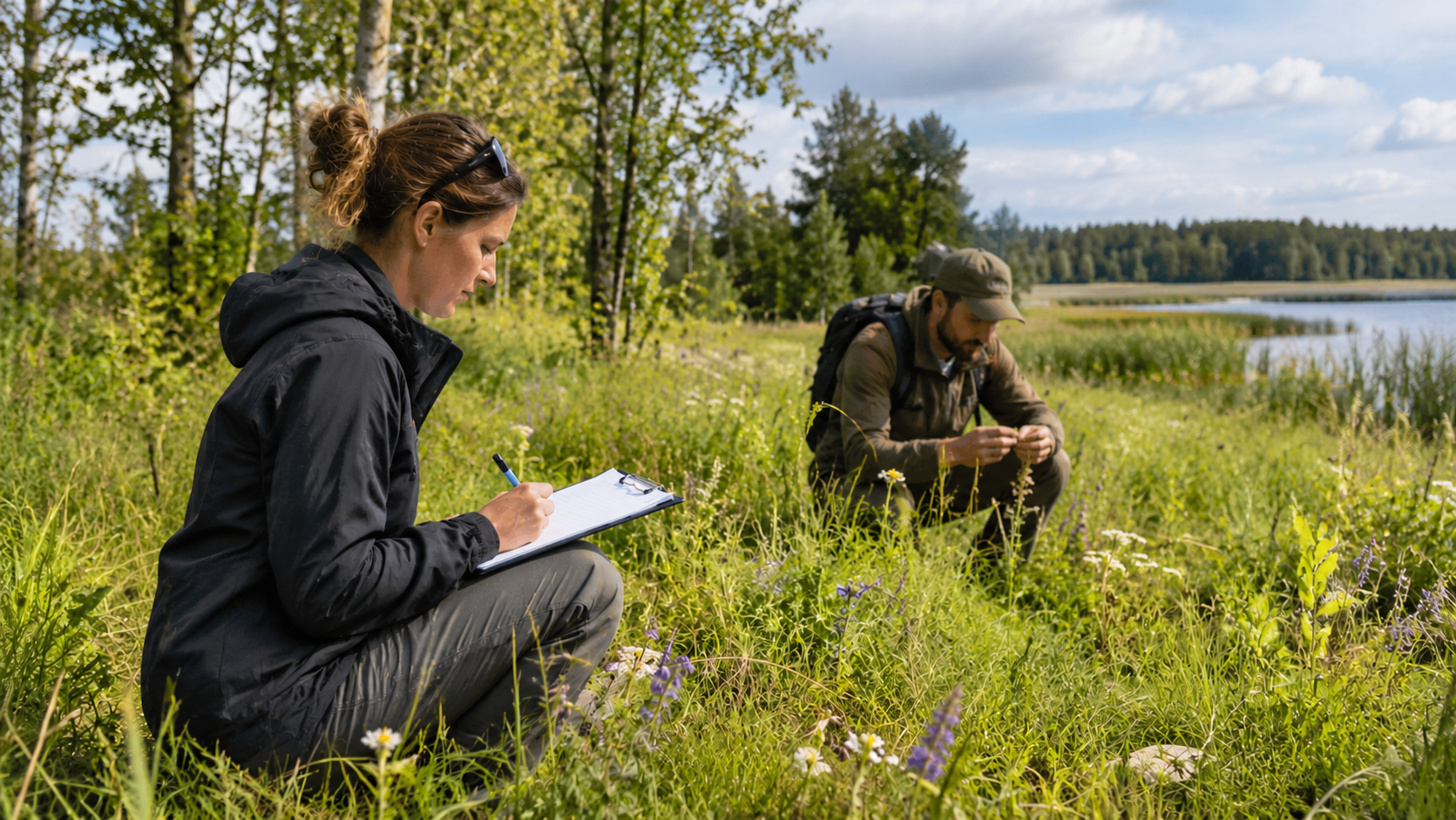
If a property is located within a protected area or near a Natura 2000 site, it may be necessary to assess the impact of the planned activities on nature. A survey may include, for example, an assessment of vegetation, wildlife, protected species or habitats.
The purpose of a Natura 2000 assessment is to determine whether the planned activities could affect the conservation objectives of the site. The fact that a property is not located directly within a protected area does not always mean that an impact assessment is unnecessary.
Soil and groundwater investigations
In certain areas, it may be important to investigate soil conditions, possible contamination or groundwater quality. This is particularly relevant for former industrial and production sites, old industrial properties or areas where environmental risks arising from previous activities are known.
Noise and air pollution assessments
If a planned building or activity could affect the surrounding living environment, a noise or air pollution assessment and modelling may be required. This may be particularly important for larger developments, industrial buildings, projects that increase traffic volumes or projects located near noise-sensitive residential areas.
Other environmental expert assessments
Depending on the project, environmental consultancy, an environmental audit, a risk assessment or an expert assessment of a specific environmental issue may also be required.
Not all of these surveys are necessary for every property. The key is to identify the work required for the specific project.
3. What is an Environmental Impact Assessment and when is it required?
An Environmental Impact Assessment (EIA) is a legally regulated procedure designed to identify the potential significant environmental impacts of a planned activity and find ways to prevent or reduce them.
An EIA may be mandatory for certain activities specified by law. In other cases, it is necessary to assess whether the planned activity could have a significant environmental impact and whether a preliminary environmental impact assessment is required.
The purpose of the preliminary assessment is to determine whether the potential impact of the planned activity could be significant enough to justify a full Environmental Impact Assessment.
It is important to understand that the need for an Environmental Impact Assessment is not decided solely by the property owner or the expert carrying out the study. The official decision is made by the authority responsible for the relevant permit or procedure, based on the applicable legislation and the circumstances of the specific activity.
An Environmental Impact Assessment should also not be confused with a Strategic Environmental Assessment (SEA). While an EIA focuses on the impacts of a specific planned activity, an SEA examines strategic planning documents, such as spatial plans and development plans.
4. When should a property owner consult an environmental specialist?
There is no need to wait until the building design is complete before seeking environmental advice. In many cases, the most sensible approach is to involve a specialist while you are still considering purchasing a property or planning its development.
You should consider consulting an environmental specialist if:
- you are planning to buy a property but are unsure whether it is subject to environmental restrictions;
- the property is located near a body of water, forest, wetland or protected natural site;
- you are planning construction in an area that may contain protected species or habitats;
- you are planning a larger development or an activity that could have a significant environmental impact;
- you wish to change the designated use of the land or develop a former industrial or production site;
- a local municipality or another government authority has requested an environmental assessment or additional surveys.
If you are unsure whether an environmental survey is necessary, it is worth first consulting a specialist in the relevant field. They can assess the available information and help determine which surveys or assessments your project may require.
5. How should you prepare for environmental surveys?
The more clearly you can describe your plans to the specialist, the easier it will be to estimate the scope and cost of the required work.
Before ordering a service, it is useful to gather the following information, if available:
- the property's address and cadastral reference number;
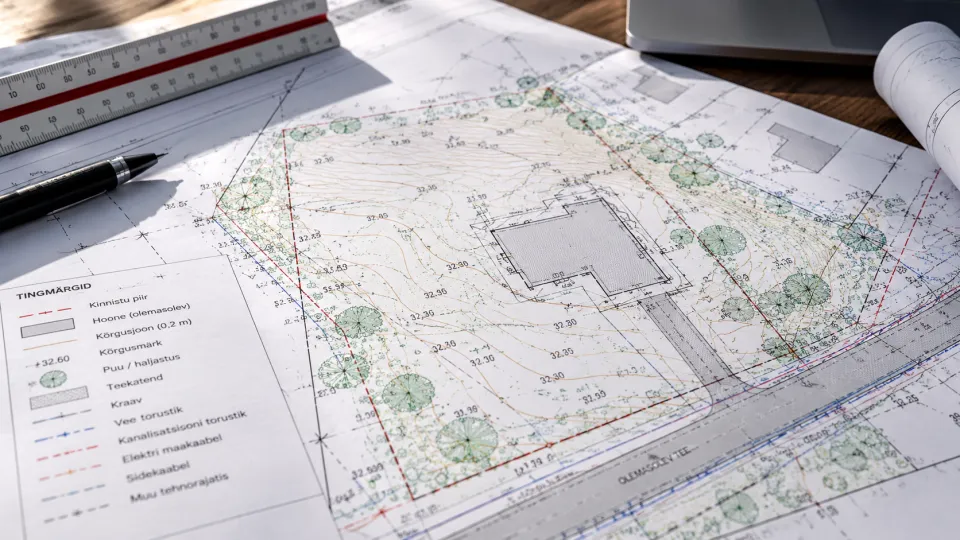
- an existing geodetic base plan or other site plan, if available;
- a preliminary description of the planned building or development;
- existing spatial plans, projects and previous surveys;
- any previous comments, positions or requirements from the local municipality or government authorities.
If you do not yet have all the necessary materials, this is not an obstacle. During an initial consultation, a specialist can help identify what additional information is needed.
Before requesting a quotation, it is also worth clarifying whether you need an initial consultation, a specific survey or a comprehensive service related to an Environmental Impact Assessment.
6. Where can you find specialists for environmental surveys and assessments?
When it comes to environmental work, it is important to find a specialist with the relevant qualifications and experience for your particular project. For example, nature surveys, noise modelling, soil investigations and Environmental Impact Assessments are often carried out by experts with different professional backgrounds.
At BeforeBuilding, you can explore companies offering environmental services and submit a free quotation request based on your needs.
**It is worth considering environmental conditions before starting the design process. **This will help you make more informed decisions, take potential restrictions into account at an early stage and avoid unexpected costs and delays later on.
Useful to know: Estonia's Environmental Impact Assessment and Environmental Management System Act (KeHJS) regulates the requirements and procedures for environmental impact assessments. Further information is available on the websites of the Estonian Environmental Board and the Ministry of Climate.